A website that worked perfectly a few years ago may no longer meet the needs of a growing business today.
As companies expand, customer expectations evolve, technology advances, and business processes become more complex. Unfortunately, many organizations continue relying on websites that were built for an earlier stage of growth.
The result is often a website that looks acceptable on the surface but quietly creates operational inefficiencies, poor user experiences, and missed business opportunities.
The challenge is that these problems don't always appear obvious. Many business owners assume their website is "good enough" because it still functions. However, a website should do more than simply exist—it should actively support business growth.
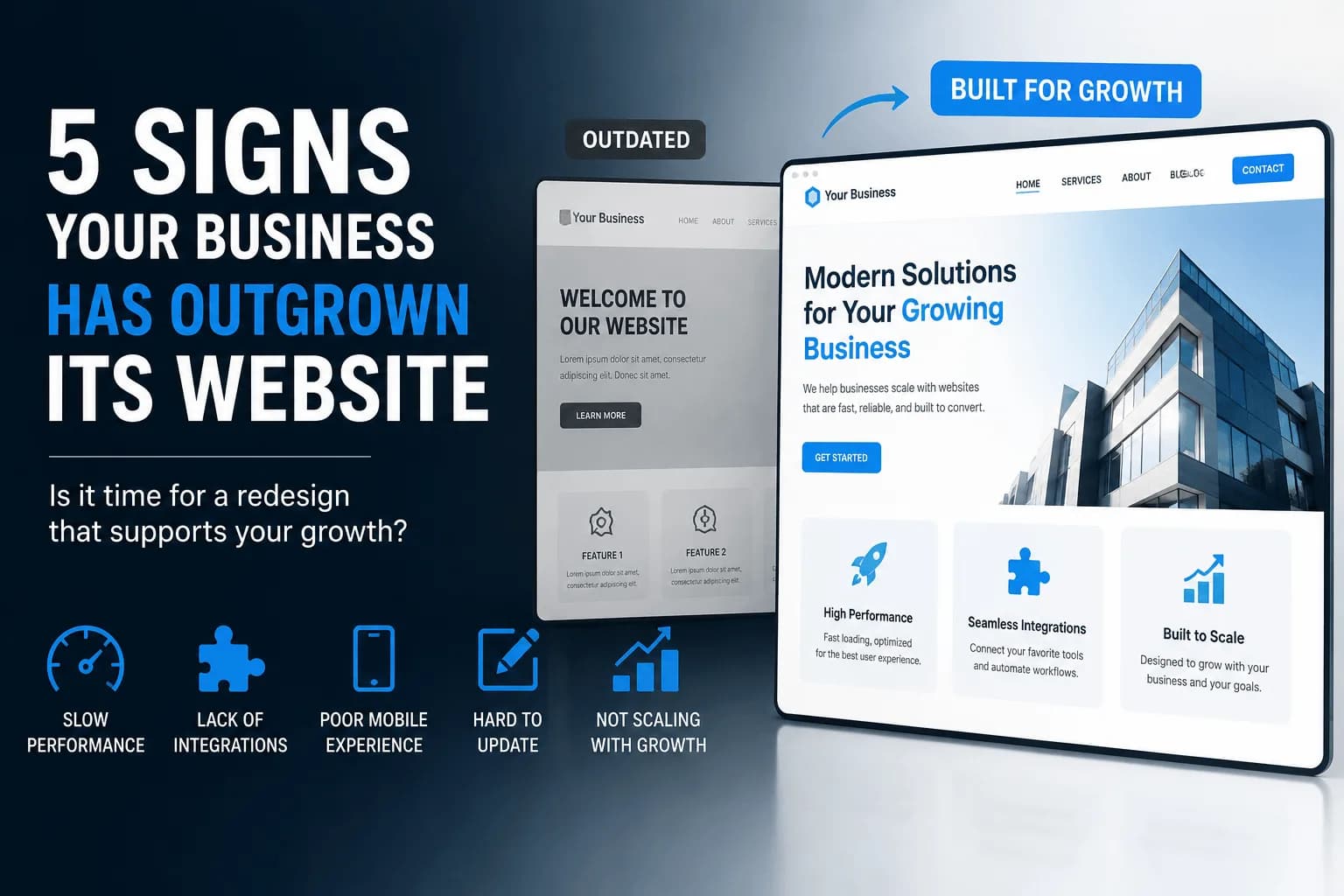
If you're wondering whether it's time for a business website redesign, here are five signs your website may have outgrown its original purpose.
1. Your Website Is Becoming Difficult to Update
One of the first signs a business has outgrown its website is when simple updates become frustrating.
Perhaps adding a new service requires developer assistance. Maybe updating content takes longer than it should. In some cases, making small changes creates unexpected issues elsewhere on the website.
Over time, this slows down business operations and discourages teams from keeping content current.
A modern website should allow businesses to:
If your website feels like it's working against you instead of supporting you, it may be time for a redesign.
2. Performance Issues Are Affecting User Experience
Website speed directly impacts user satisfaction.
Visitors expect pages to load quickly, particularly on mobile devices. If your website is slow, potential customers may leave before engaging with your content.
Common symptoms include:
Slow page loading
Poor Core Web Vitals
Delayed interactions
High bounce rates
Many older websites were built before modern performance standards became a priority.
A business website redesign often provides an opportunity to improve:
Site speed
Mobile performance
Core Web Vitals
SEO performance
User engagement
Performance isn't just a technical concern—it directly influences business results.
3. Your Website Doesn't Integrate With Business Tools
Modern businesses rely on multiple systems to manage operations.
Examples include:
When these systems operate independently, teams often spend unnecessary time transferring information manually.
A modern website should act as part of a connected ecosystem rather than a standalone platform.
If your website cannot integrate effectively with the tools your business relies on, you've likely reached the limits of its original architecture.
4. Mobile Users Have a Poor Experience
For many businesses, mobile visitors now represent the majority of website traffic.
Unfortunately, some websites were originally designed with desktop users in mind.
Common mobile issues include:
Difficult navigation
Slow loading pages
Poorly optimized forms
Broken layouts
Hard-to-click buttons
A poor mobile experience can significantly impact lead generation and conversions.
A modern business website redesign should prioritize mobile usability from the beginning rather than treating it as an afterthought.
5. Your Website No Longer Reflects Your Business
Businesses evolve.
Services expand. Markets change. New capabilities emerge.
Yet many websites continue presenting an outdated version of the company.
Ask yourself:
Does the website accurately represent what we do today?
Are our current services clearly communicated?
Does the website reflect our level of expertise?
Would prospective clients gain confidence from visiting it?
Your website is often the first interaction potential customers have with your business.
If it no longer represents your capabilities, you're likely missing opportunities.
Redesign vs Rebuild: What's the Difference?
Not every website problem requires a complete rebuild.
Sometimes:
Design improvements are sufficient
Performance optimization solves the issue
New integrations can extend functionality
However, when multiple limitations exist simultaneously, a more comprehensive redesign may provide greater long-term value.
The goal isn't to rebuild for the sake of rebuilding.
The goal is to ensure your website supports current and future business objectives.
What a Modern Business Website Should Deliver
Today's business websites should provide more than attractive visuals.
They should support:
A website should function as a business asset, not just a digital brochure.
Final Thoughts
A website that helped launch your business may not be the same website that helps scale it.
As businesses grow, technology requirements change. What once worked well can gradually become a limitation.
If your website is difficult to update, slow, disconnected from your business tools, poorly optimized for mobile users, or no longer reflects your capabilities, it may be time to consider a business website redesign.
The most successful websites evolve alongside the businesses they support. By regularly evaluating your website's performance and alignment with business goals, you can ensure it continues to contribute to growth rather than holding it back.