
Writing
Thoughts on themodern web.
Deep dives into WordPress, WooCommerce, automation, performance, and the architecture decisions that move businesses forward.

Vector Databases vs Traditional Databases: Why AI Applications Often Need Both
Vector databases and traditional databases solve different problems. Learn why modern AI applications often use both for structured data, semantic search, and contextual retrieval.
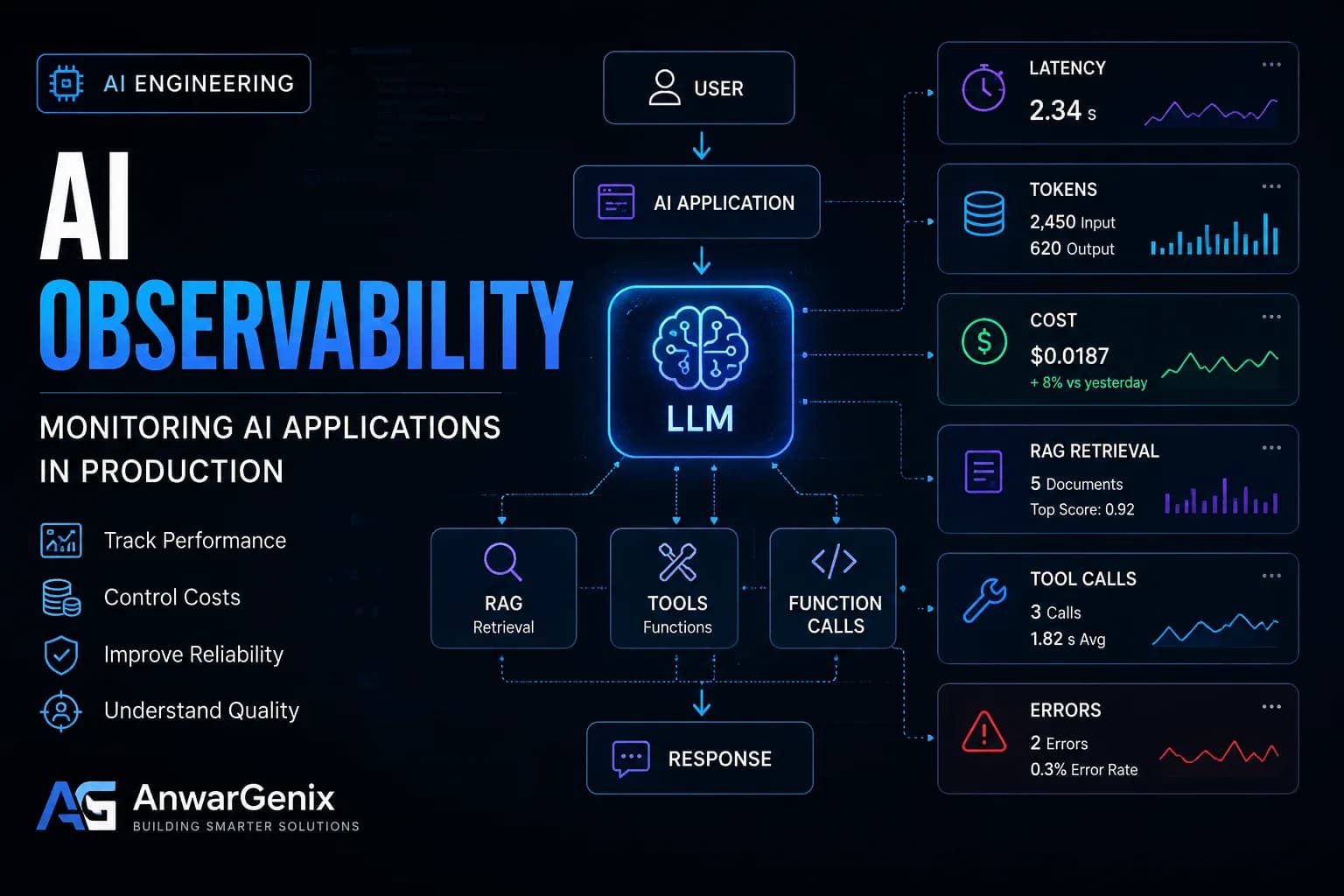 AI & Automation
AI Observability Explained: Monitoring AI Applications in Production
AI applications need more than traditional monitoring. Learn how AI observability helps developers understand latency, token usage, costs, RAG retrieval, tool calls, errors, and response quality in production AI systems.
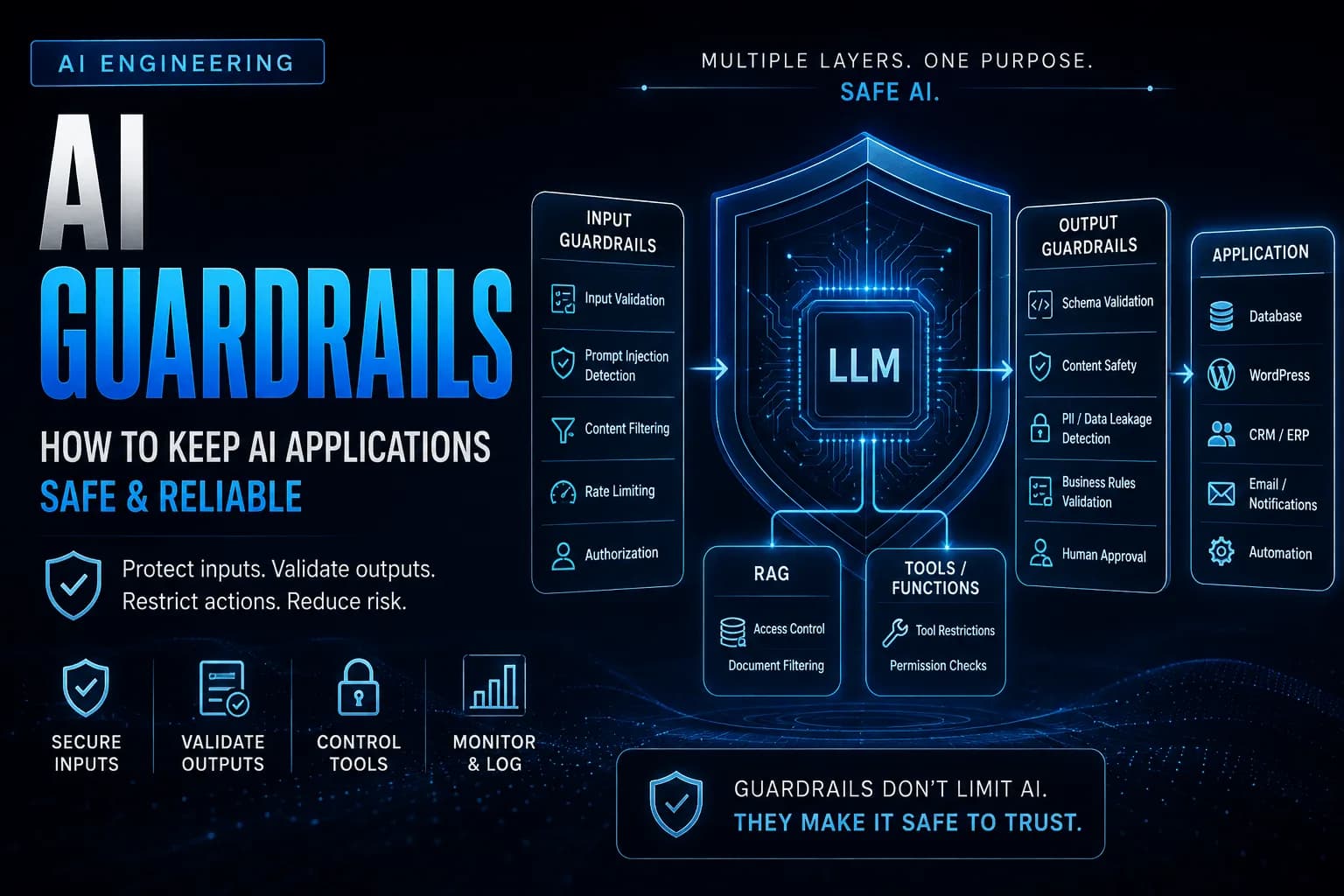 AI & Automation
AI Guardrails Explained: How to Keep AI Applications Safe and Reliable
AI applications need more than capable models. Learn how guardrails help control AI inputs, outputs, tool access, RAG retrieval, and automated actions while reducing risks such as prompt injection, data leakage, and unauthorized operations.
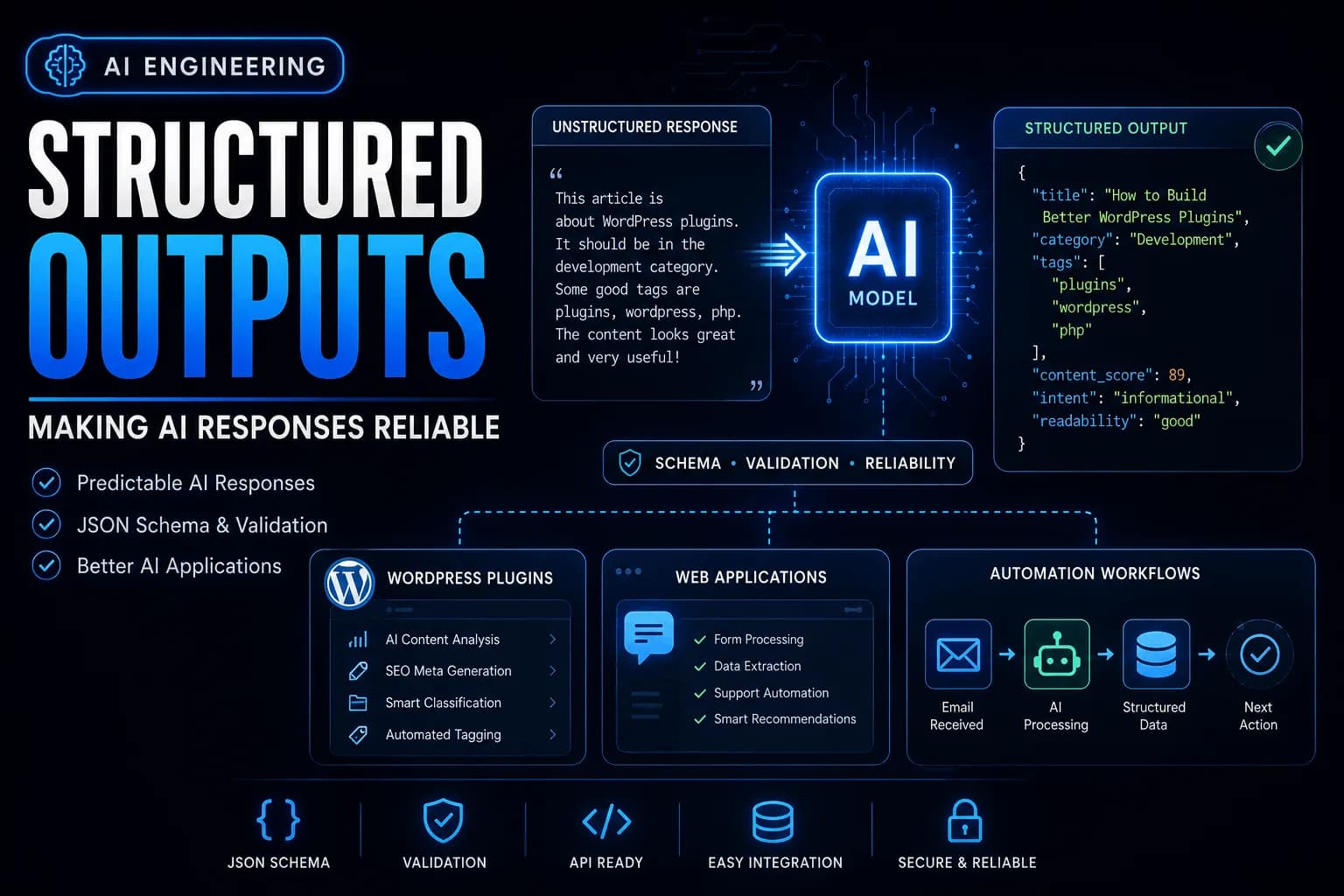 AI & Automation
Structured Outputs Explained: Making AI Responses Reliable
Structured Outputs give AI applications predictable data instead of unreliable free-form responses. Learn how schemas make LLM output easier to validate, process, and integrate into WordPress plugins, web applications, and automation workflows.
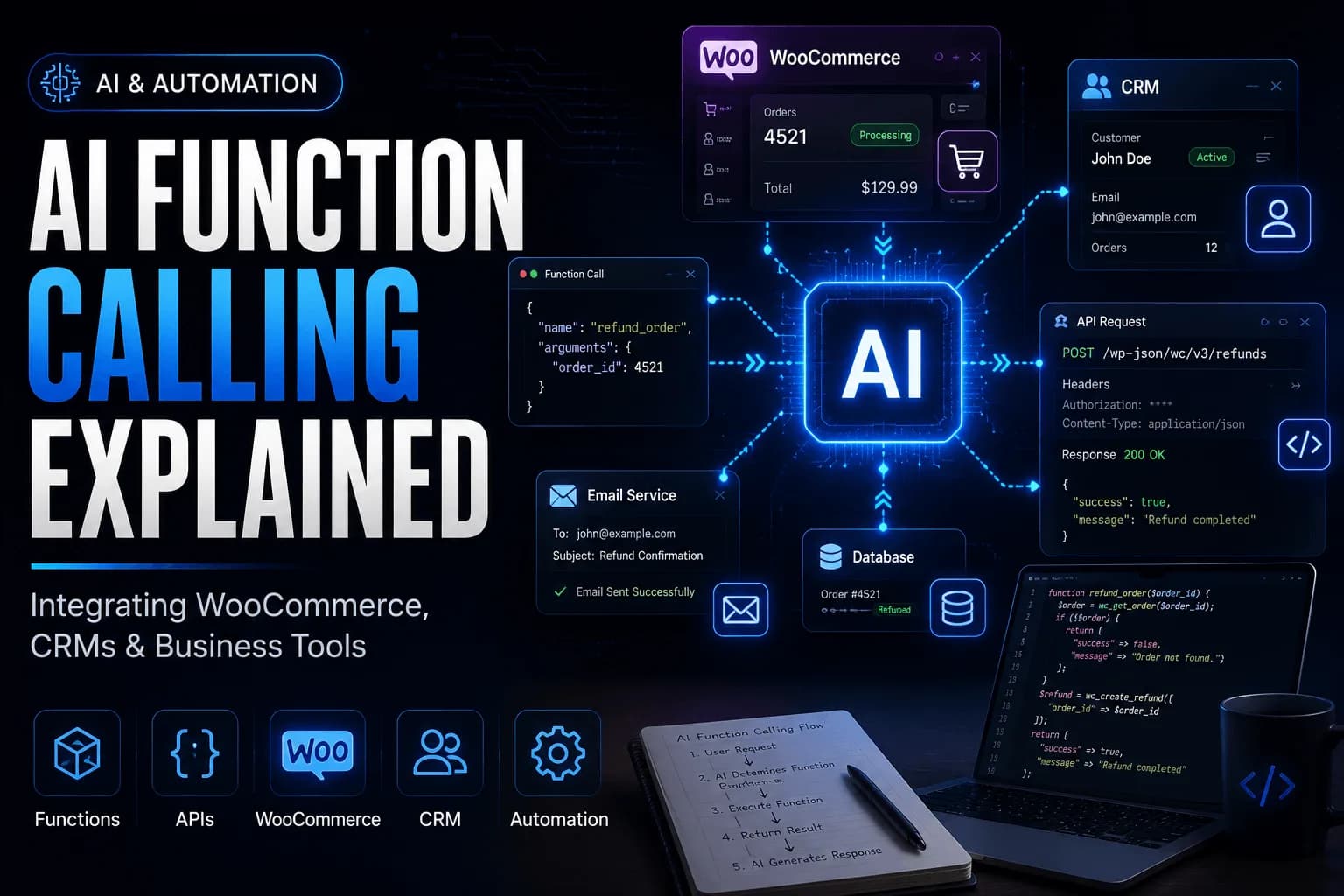 AI & Automation
AI Function Calling Explained: Integrating WooCommerce, CRMs & Business Tools
Function Calling enables AI to move beyond generating text by securely interacting with WooCommerce, CRMs, APIs, and business applications. Learn how Function Calling works, how it differs from RAG, and how to build production-ready AI applications with practical examples and best practices.
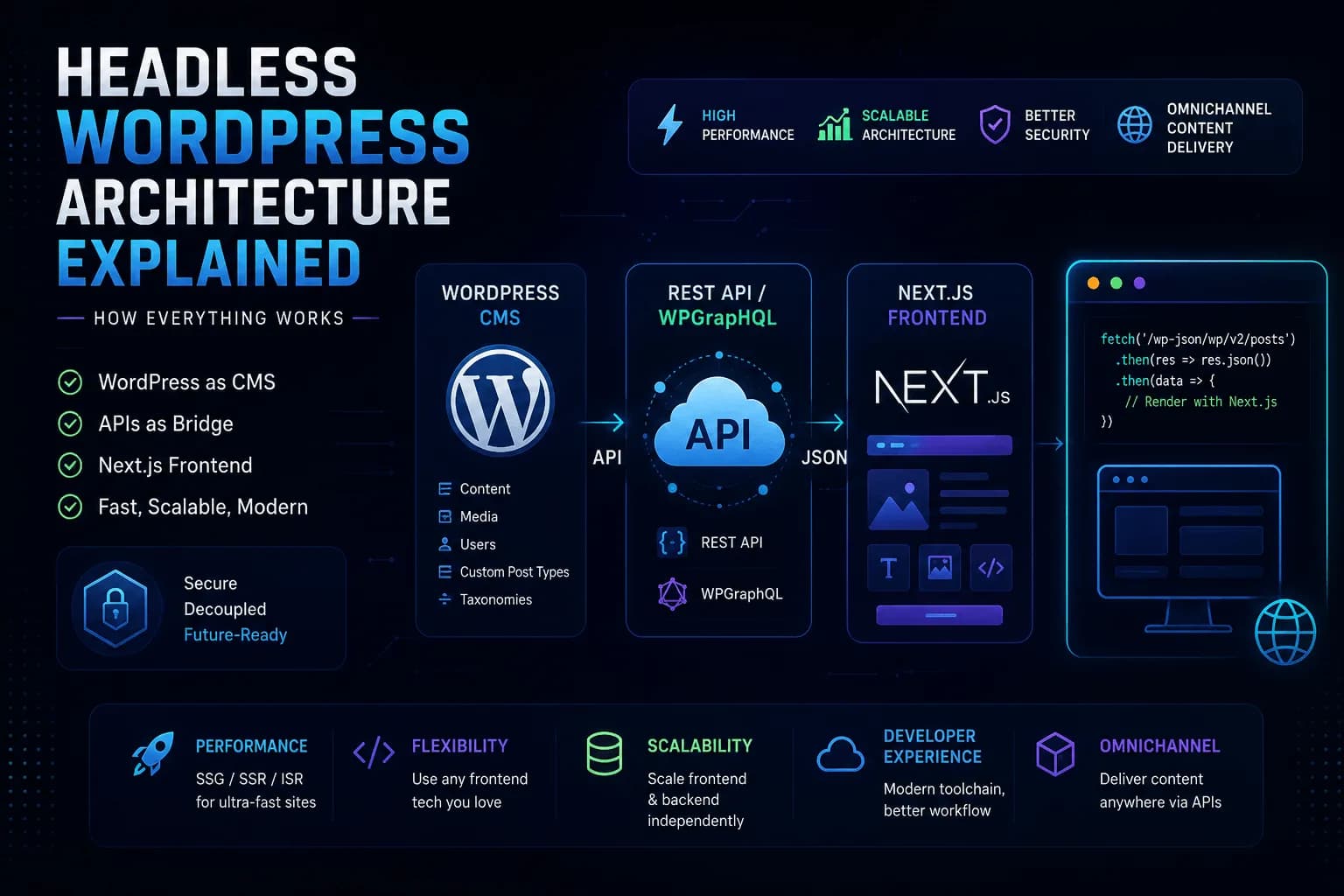 Headless WordPress
Headless WordPress Architecture Explained: How Everything Works
Headless WordPress is changing how modern websites are built by separating content management from frontend presentation. Learn how Headless WordPress architecture works, how WordPress communicates with Next.js through APIs, and the best practices for building scalable, high-performance applications.
 AI & Automation
Retrieval-Augmented Generation (RAG) Explained: How AI Uses Your Own Data
Retrieval-Augmented Generation (RAG) is transforming how AI applications access and use business knowledge. Learn how embeddings, vector databases, semantic search, and language models work together to deliver accurate, context-aware responses while reducing AI hallucinations.